oklahoma commercial driver’s manual
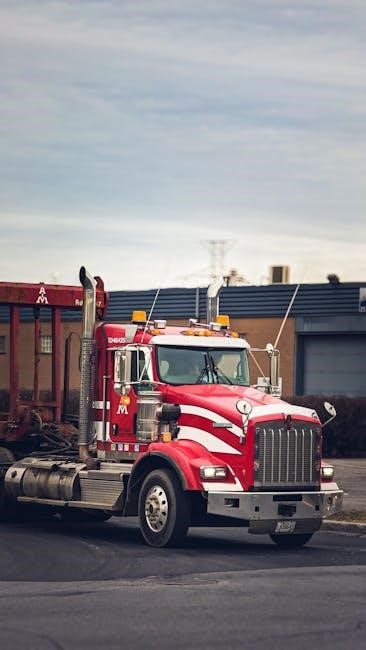
Oklahoma Commercial Driver’s Manual: A Comprehensive Plan
Oklahoma’s CDL manual, updated March 2025, details requirements per CFR 383.25(a)(1). It covers Class A, B, and C vehicles, including buses, and utilizes a modernized testing system for effective preparation.
Obtaining a Commercial Driver’s License (CDL) in Oklahoma signifies a commitment to professional driving and adherence to stringent safety standards. This manual serves as a comprehensive guide, meticulously aligned with federal regulations outlined in CFR 383.25(a)(1), ensuring drivers possess the knowledge and skills necessary for operating commercial motor vehicles (CMVs) safely and responsibly.
The Oklahoma Department of Public Safety (DPS) administers the CDL program, overseeing testing and licensing procedures. This manual details the various CDL classifications – A, B, and C – each corresponding to different vehicle types and operational requirements. Understanding these classifications is crucial for selecting the appropriate license for your intended driving activities.
Furthermore, the manual incorporates a modernized testing system designed to evaluate a driver’s competency across a broad spectrum of knowledge areas, including general knowledge, combination vehicles, air brakes, and vehicle inspection. Successful completion of these tests is paramount to earning your Oklahoma CDL and embarking on a career in the commercial transportation industry. This guide is based on the March 2025 version.
II. CDL Requirements & Eligibility

To qualify for a Commercial Driver’s License (CDL) in Oklahoma, applicants must meet specific requirements established by the Oklahoma Department of Public Safety (DPS) and federal regulations, notably CFR 383.25(a)(1). These criteria encompass age, licensing history, and driving record evaluations, ensuring only qualified individuals operate commercial motor vehicles (CMVs).
Applicants must be at least 18 years old to operate vehicles intrastate (within Oklahoma) and 21 years old for interstate commerce (crossing state lines). A valid Oklahoma driver’s license is a prerequisite, and applicants must demonstrate a clean driving record, free from significant violations. Disqualifying offenses, detailed later in this manual, can impede eligibility.
Furthermore, applicants must provide necessary documentation, including proof of identity, social security number, and residency. Medical certification, confirming physical and mental fitness to operate a CMV, is also mandatory. The CDL application process, outlined in detail, ensures compliance with all legal and safety standards. The current CDL Drivers Manual is Group A, March 2025.
III. Age and Licensing Requirements
Oklahoma establishes distinct age requirements for obtaining a Commercial Driver’s License (CDL) based on the type of commercial operation. Individuals intending to operate CMVs solely within the state – intrastate commerce – must be at least 18 years of age. However, those planning to engage in interstate commerce, transporting goods or passengers across state lines, are required to be 21 years or older.
Prior to CDL eligibility, applicants must possess a valid Oklahoma driver’s license. This existing license serves as a foundation, demonstrating basic driving competency. Furthermore, a tiered licensing system may apply for younger drivers (18-20), potentially restricting the types of CMVs they can operate initially.

Applicants under 21 may face limitations regarding hazardous materials endorsements. Compliance with federal regulations, including CFR 383.25(a)(1), is crucial. The Oklahoma DPS verifies age and licensing status during the application process, ensuring adherence to these legal stipulations. Proper documentation, such as a birth certificate, is required to confirm age.
IV. Driver Disqualifications
Oklahoma enforces stringent driver disqualification rules, mirroring federal regulations outlined in CFR 383.25(a)(1), to maintain highway safety. Several offenses can lead to CDL suspension or revocation, impacting a driver’s ability to operate Commercial Motor Vehicles (CMVs).

Serious traffic violations, including DUI/DWI convictions, reckless driving, and leaving the scene of an accident, trigger disqualification. Additionally, offenses related to the operation of a CMV – such as refusing a blood alcohol test or using a CMV to commit a felony – result in immediate suspension.
A pattern of repeated violations, even seemingly minor ones, can accumulate points leading to disqualification. Furthermore, certain medical conditions rendering a driver unsafe to operate a CMV, as determined by a medical examiner, can also result in license suspension. The length of disqualification varies based on the severity and nature of the offense, ranging from several months to lifetime revocation.
Drivers are responsible for maintaining a clean driving record and adhering to all traffic laws to avoid disqualification.
V. Obtaining Your Oklahoma CDL
Securing an Oklahoma Commercial Driver’s License (CDL) involves a structured process designed to ensure competency and safety. The journey begins with meeting the eligibility criteria, including age and licensing requirements, as detailed in the Oklahoma CDL manual (March 2025 version).
Applicants must successfully complete a comprehensive application process, providing necessary documentation such as proof of identity, residency, and medical certification. Following application submission, candidates are required to pass a series of rigorous tests, beginning with the general knowledge exam.
This initial assessment evaluates understanding of crucial CMV operation principles and regulations, referencing CFR 383.25(a)(1). Depending on the desired CDL classification (A, B, or C), additional endorsements and tests may be necessary, including skills tests demonstrating proficiency in vehicle control and safe driving practices.
Oklahoma utilizes a modernized testing system to evaluate applicants effectively. Successful completion of all required tests culminates in the issuance of an Oklahoma CDL, authorizing operation of commercial motor vehicles.
VI. Application Process & Documentation
The Oklahoma CDL application process demands meticulous attention to detail and complete documentation. Applicants must first obtain the appropriate application form from the Oklahoma Department of Public Safety, ensuring it’s the current version aligned with the March 2025 CDL manual.
Required documentation includes a valid Oklahoma driver’s license (or equivalent from another state), proof of Social Security number, and documentation verifying legal residency in the United States. A current medical examiner’s certificate (DOT physical) is mandatory, confirming physical qualifications for commercial driving, as per CFR 383.25(a)(1).
Applicants must also provide a detailed driving record, including any past violations or suspensions. For those seeking specific endorsements (e.g., hazardous materials), additional documentation and background checks are required.
The completed application, along with all supporting documents, must be submitted to a designated Oklahoma DPS examination site. Accurate and truthful information is crucial; any discrepancies may lead to application denial.
VII. Required Testing – General Knowledge
The Oklahoma CDL general knowledge test is a foundational assessment, crucial for all applicants regardless of the desired CDL classification. This computerized exam, part of the modernized testing system, evaluates understanding of essential commercial driving principles, as outlined in the March 2025 CDL manual.
Key areas covered include regulations outlined in CFR 383.25(a)(1), driver responsibilities, safe driving practices, and basic vehicle control. Questions assess knowledge of air brake systems (even if not requiring an air brake endorsement), cargo securement, and hours of service regulations.
Applicants must achieve a passing score, typically 80%, to proceed in the licensing process. Thorough preparation using the official Oklahoma CDL manual is highly recommended. Practice tests are available to familiarize candidates with the exam format and content.
Successful completion of the general knowledge test is a prerequisite for all subsequent skill and endorsement tests, forming the cornerstone of Oklahoma’s CDL certification process.
VIII. CDL Classifications
Oklahoma categorizes Commercial Driver’s Licenses (CDLs) into three primary classes: A, B, and C, each defined by the type of vehicle operated and its Gross Vehicle Weight Rating (GVWR), as detailed in the March 2025 CDL manual and governed by CFR 383.25(a)(1).
Class A CDL permits operation of combination vehicles – tractor-trailers – with a GVWR exceeding 26,001 pounds. Class B CDL is for heavy straight vehicles, also exceeding 26,001 pounds GVWR, but not designed to pull a trailer. Class C CDL covers vehicles not requiring air brakes, or those transporting hazardous materials in smaller quantities.
A bus, for instance, can fall under Class A, B, or C depending on its GVWR and whether it operates as part of a combination vehicle. Each class necessitates specific knowledge and skill testing, building upon the foundational general knowledge assessment.
Understanding these classifications is vital for applicants to select the appropriate license for their intended commercial driving activities, ensuring compliance with Oklahoma regulations.
IX. Class A CDL – Combination Vehicles
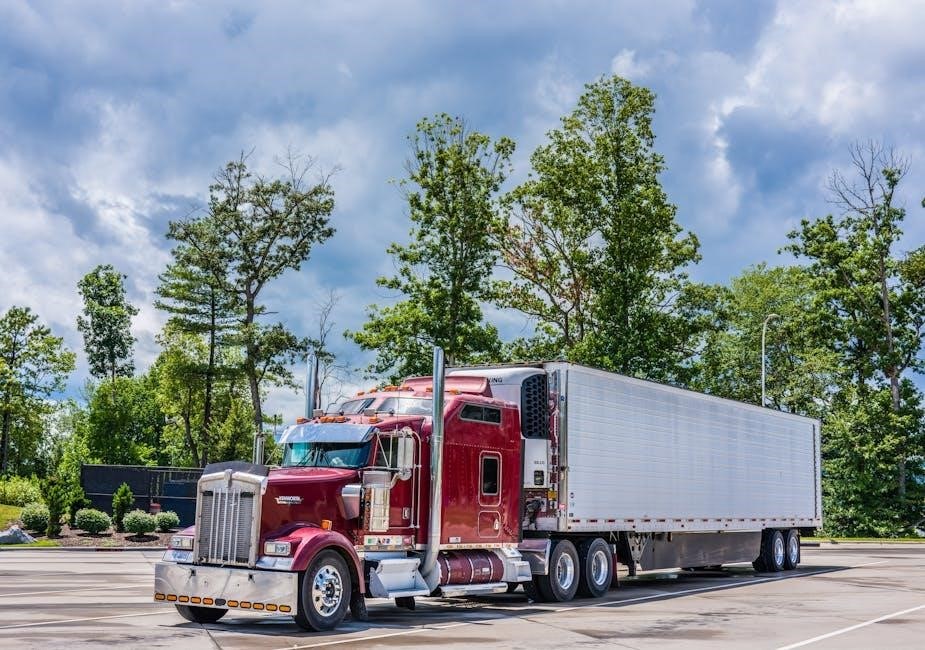
Oklahoma’s Class A Commercial Driver’s License (CDL) is required for operating combination vehicles – any vehicle pulling one or more trailers – with a Gross Vehicle Weight Rating (GVWR) exceeding 26,001 pounds. This is the most comprehensive CDL classification, demanding a high level of skill and knowledge, as outlined in the March 2025 CDL manual and CFR 383.25(a)(1).
Drivers holding a Class A CDL are authorized to operate tractor-trailers, livestock carriers, and flatbeds, among other combinations. The testing process is rigorous, encompassing general knowledge, combination vehicle specifics, and often endorsements for hazardous materials or passenger transport.
Successful completion requires demonstrating proficiency in vehicle control, pre-trip inspection, and safe operating procedures specific to combination vehicles. Applicants must understand coupling and uncoupling procedures, as well as the unique challenges presented by handling longer, heavier loads.
Obtaining a Class A CDL opens doors to a wide range of commercial driving opportunities within Oklahoma and beyond.
X. Class B CDL – Heavy Straight Vehicles
Oklahoma’s Class B Commercial Driver’s License (CDL) permits operation of heavy straight vehicles with a Gross Vehicle Weight Rating (GVWR) exceeding 26,001 pounds. Unlike Class A, it doesn’t involve pulling multiple trailers, focusing instead on single-unit trucks and buses, as detailed in the March 2025 CDL manual and referencing CFR 383.25(a)(1).
Common vehicles operated with a Class B CDL include box trucks, dump trucks, and large buses. While not as complex as combination vehicles, these require significant skill due to their size and weight. The licensing process involves passing a general knowledge test, as well as a specific test for Class B vehicles.
Drivers must demonstrate competence in vehicle control, safe maneuvering, and thorough pre-trip inspections. Endorsements may be required for transporting passengers or hazardous materials, adding to the qualifications.
A Class B CDL provides access to numerous employment opportunities in construction, delivery services, and public transportation throughout Oklahoma and neighboring states.
XI. Class C CDL – Vehicles Not Requiring Air Brakes
Oklahoma’s Class C Commercial Driver’s License (CDL) is designed for operating vehicles that don’t necessitate air brake endorsements. As outlined in the March 2025 CDL manual and referencing CFR 383.25(a)(1), this category covers vehicles with a GVWR of less than 26,001 pounds, or those transporting hazardous materials in quantities that don’t require placarding.
Typical vehicles falling under Class C include small delivery trucks, passenger vans, and some types of buses. While seemingly less demanding than Class A or B, a Class C CDL still demands a comprehensive understanding of safe driving practices and vehicle operation.
The licensing process involves passing the general knowledge test, alongside a specific Class C knowledge test. Drivers must demonstrate proficiency in vehicle inspection, safe driving techniques, and adherence to Oklahoma traffic laws.
Obtaining a Class C CDL opens doors to employment in various sectors, including local delivery, shuttle services, and non-hazardous material transportation, providing a valuable career pathway.
XII. Air Brake System
Oklahoma’s Commercial Driver’s License (CDL) manual, updated in March 2025, dedicates significant attention to air brake systems, crucial for safe operation of many commercial vehicles. Understanding these systems is paramount, as outlined by CFR 383.25(a)(1), and often a mandatory endorsement for specific CDL classes.
Air brakes utilize compressed air to apply braking force, differing significantly from hydraulic systems. The manual details the core components: the air compressor, governor, storage tanks, and foundation brakes. Proper functionality of each component is vital for reliable stopping power.
Drivers must comprehend the principles of air loss rates, low-pressure warnings, and spring brake activation. Regular inspection and maintenance, as detailed in the manual, are essential to identify and address potential issues before they compromise safety.
Mastering air brake operation is not merely about applying the brakes; it’s about understanding the system’s nuances, anticipating potential failures, and responding appropriately to ensure safe and controlled vehicle operation on Oklahoma’s roadways.
XIII. Air Brake Inspection & Maintenance

Oklahoma’s CDL manual, version March 2025, emphasizes meticulous air brake inspection and maintenance as critical safety procedures, aligning with CFR 383.25(a)(1) regulations. Daily inspections are non-negotiable, ensuring all components function correctly before operation.
Drivers must systematically check for leaks in air lines and reservoirs, verifying adequate air pressure build-up and loss rates. Brake chambers, slack adjusters, and foundation brakes require thorough examination for wear and damage. The manual provides detailed checklists for these inspections.
Maintenance extends beyond visual checks. Drivers should understand the importance of draining water from air tanks to prevent freezing and corrosion. Regular lubrication of components and timely replacement of worn parts are crucial for optimal performance.
Neglecting air brake maintenance can lead to catastrophic failures. The manual stresses that any identified defects must be reported and rectified before the vehicle is driven, safeguarding both the driver and other road users. Proper upkeep extends component life and reduces repair costs.
XIV. Air Brake Operation & Usage
Oklahoma’s Commercial Driver’s License (CDL) manual, updated March 2025 and adhering to CFR 383.25(a)(1), details proper air brake operation. Understanding the system is vital for safe vehicle control, particularly with heavy vehicles.
Drivers must be proficient in applying and releasing the service brake, utilizing the parking brake correctly, and performing emergency brake applications. The manual emphasizes the importance of knowing how air brakes function differently than hydraulic brakes, especially in wet conditions.

Proper usage includes anticipating stops and applying brakes gradually, avoiding sudden or harsh applications. Drivers should monitor air pressure gauges continuously, recognizing low-pressure warnings and taking appropriate action.
The manual also covers the use of the anti-lock braking system (ABS), if equipped, and how it interacts with air brakes. Drivers must understand how ABS prevents wheel lock-up, maintaining steering control during emergency stops. Regular practice and familiarity with the system are paramount for safe operation.
XV. Vehicle Inspection
Oklahoma’s Commercial Driver’s License (CDL) manual, updated March 2025 and aligned with CFR 383.25(a)(1), stresses the critical importance of thorough vehicle inspections. These inspections are fundamental to ensuring safe operation and preventing accidents.
The manual details a systematic approach to inspection, covering essential components like brakes, tires, lights, steering, and coupling devices. Drivers are responsible for identifying and reporting any defects that could compromise vehicle safety.
Inspections are categorized into pre-trip, in-transit, and post-trip procedures, each serving a distinct purpose. Pre-trip inspections are conducted before operating the vehicle, in-transit checks during the journey, and post-trip inspections upon completion.
Drivers must document all inspections accurately, noting any deficiencies and the corrective actions taken. A detailed inspection report is a crucial record of the vehicle’s condition. Consistent and diligent inspections are not merely a regulatory requirement but a cornerstone of responsible commercial driving.
XVI. Pre-Trip Inspection Procedures
Oklahoma’s CDL manual, updated March 2025 and referencing CFR 383.25(a)(1), outlines a comprehensive pre-trip inspection process. This systematic check is vital before operating any commercial vehicle, ensuring all components are functioning correctly and safely.
The procedure begins with a vehicle overview, examining the general condition. Drivers then inspect critical areas: engine compartment (fluid levels, belts, hoses), brakes (lines, drums, pads), tires (pressure, tread depth), lights (headlights, brake lights, turn signals), and steering.
Specific attention is given to coupling devices on combination vehicles, verifying secure connections. The manual emphasizes a thorough walk-around inspection, checking for any visible damage or defects. Drivers must also test the operation of all safety equipment.
Documentation of the pre-trip inspection is crucial, noting any discrepancies. Addressing identified issues before operation is paramount. A diligent pre-trip inspection significantly reduces the risk of accidents and ensures compliance with Oklahoma regulations.
XVII. In-Transit Inspection Procedures
Oklahoma’s Commercial Driver’s License (CDL) manual, updated March 2025 and aligned with CFR 383.25(a)(1), stresses the importance of regular in-transit inspections. These checks are crucial for identifying developing issues during a trip, preventing potential breakdowns or accidents.
Drivers are required to conduct these inspections within the first 50 miles of a trip, and then approximately every 150 miles or every three hours – whichever comes first. Focus areas include tires, brakes, lights, and load securement. Any changes in vehicle performance, such as unusual noises or vibrations, should prompt an immediate inspection.
The in-transit inspection is less exhaustive than the pre-trip inspection, but equally vital. It involves a quick visual and functional check of key components. Drivers should also monitor gauges and warning lights continuously.
Documenting any findings is essential, and any defects discovered must be addressed before continuing the journey. Prioritizing safety and adhering to these procedures ensures a secure and compliant transit experience throughout Oklahoma.
XVIII. Post-Trip Inspection Procedures
Oklahoma’s Commercial Driver’s License (CDL) manual, updated March 2025 and referencing CFR 383.25(a)(1), emphasizes thorough post-trip inspections. These inspections are vital for identifying maintenance needs and ensuring vehicle safety for subsequent drivers.
After completing a trip, drivers must systematically inspect the vehicle, checking all critical components. This includes tires, brakes, lights, fluids, and the cargo securement system. Pay close attention to any damage or wear observed during the journey.
Drivers are responsible for reporting all defects, no matter how minor, to the motor carrier. A written report detailing the findings is typically required, outlining the specific issues and their location on the vehicle.
Accurate and detailed reporting is crucial for preventative maintenance and preventing further damage. The post-trip inspection isn’t just a formality; it’s a key component of maintaining a safe and reliable commercial vehicle fleet within Oklahoma’s regulations.
XIX. Safe Driving Practices
Oklahoma’s Commercial Driver’s License (CDL) manual, updated March 2025 and aligned with CFR 383.25(a)(1), places paramount importance on safe driving practices. These practices are designed to minimize risks and prevent accidents involving commercial vehicles.
Drivers must prioritize maintaining a safe following distance, adjusting to weather and road conditions, and managing fatigue. Regular breaks are essential to combat drowsiness and maintain alertness throughout the journey.
Speed management is critical; always adhere to posted speed limits and reduce speed when conditions warrant. Proper lane usage, signaling intentions clearly, and being aware of surroundings are also fundamental safe driving techniques.
Furthermore, the manual stresses the importance of avoiding distractions, such as cell phone use or eating while driving. Proactive hazard recognition and defensive driving strategies are key to anticipating and avoiding potential collisions, ensuring the safety of both the driver and other road users in Oklahoma.
XX. Defensive Driving Techniques
Oklahoma’s CDL manual, reflecting standards like CFR 383.25(a)(1) and updated in March 2025, emphasizes defensive driving as a core safety skill. This proactive approach anticipates potential hazards and mitigates risks before they escalate.
Key techniques include maintaining situational awareness – constantly scanning the road, checking mirrors, and identifying potential dangers. Expecting the unexpected and being prepared to react are crucial elements.
Space management is vital; maintaining ample following distance provides reaction time. Drivers should also utilize lane positioning strategically to maximize visibility and create escape routes.
Communication through proper signaling is essential, informing other drivers of your intentions. Avoiding aggressive driving behaviors, like tailgating or speeding, contributes to a safer environment.

Ultimately, defensive driving isn’t about avoiding accidents entirely, but minimizing their severity. By consistently applying these techniques, Oklahoma CDL holders can significantly reduce the likelihood of collisions and protect themselves and others on the road.
XXI. Oklahoma Specific Traffic Laws & Regulations
Oklahoma’s Commercial Driver’s License (CDL) manual, aligned with federal regulations like CFR 383.25(a)(1) and last updated in March 2025, details state-specific traffic laws crucial for safe operation. These regulations supplement federal guidelines;
Oklahoma law dictates specific speed limits for commercial vehicles, often lower than passenger vehicle limits, particularly in construction zones. Understanding these limits is paramount.
Restrictions apply to hazardous materials transport, including route limitations and placarding requirements. Drivers must be fully compliant with these rules.
Weight and dimension regulations are strictly enforced in Oklahoma. Overweight or oversized loads require special permits and adherence to specific guidelines.
Furthermore, Oklahoma has specific laws regarding cell phone use and texting while driving, even for hands-free devices. Compliance is essential to avoid penalties.
Staying informed about these state-specific regulations, alongside federal standards, is a continuous responsibility for all Oklahoma CDL holders, ensuring safe and legal operation on state roadways.
Leave a Reply
You must be logged in to post a comment.